When my daughter gets in the car at the end of the school day and the explosion starts, every parent knows the version of this in their own household, my first instinct used to be to fix it. To ask what happened, to problem-solve, to move us towards a solution. I thought that was what support looked like.
It isn't. Not in that moment. In that moment, what she needed was for me to drive the decompression chamber home without trying to be the mechanic.
Here's what I came to understand: behaviour is information. Every behaviour. The meltdowns, the shutdowns, the refusals, the explosions that seem to come from nowhere, they're all carrying a message. The message might be 'this is too much.' It might be 'I don't have the tools.' It might be 'I don't have the words.' But it's always a message. And if we respond to the behaviour as a problem to solve, we miss the message entirely.
Dr Ross Green's collaborative proactive solutions model has a phrase at its centre that changed how I see everything: kids do well if they can. Not if they want to. If they can. When a child isn't doing well, it's not because they're choosing not to, it's because something is blocking them. And the job isn't to overcome the behaviour. It's to find out what the block is.
My daughter had a pattern for years before we had language for it. At school, everything was fine. Teachers would report how well she was doing, how social she was, how capable. And then she'd get in the car, the door would close, and everything would avalanche. I couldn't understand it.
“When she got in the car and the door closed, she could finally put down the backpack. The sound of it hitting the floor is what I was hearing every afternoon, not defiance. Exhaustion.”
Follow on Instagram
What was happening was this: she was carrying her school day in a metaphorical backpack. Every sensory input, every social demand, every transition, every adjustment she made to get through the day went in. By the time the final bell rang, that backpack was so heavy she could barely walk. Getting in the car was the first moment of the day when she could finally put it down. And the sound of it hitting the floor is what I was hearing every afternoon.
Understanding that changed everything I thought I was supposed to do. Instead of trying to help her process it, I learned to make space for it. Car ride home: no questions. No demands. No attempts to understand or direct. Just presence, and the quiet reassurance that she didn't have to perform for me.
And slowly, once her nervous system came down, the rest would become possible. Not immediately, sometimes not that evening at all. But the unloading had to happen before anything else could.
'How was your day?' is the wrong question in the wrong moment for a child who has just used everything they had to get through that day. The question adds to the backpack. It doesn't take anything out.
Over time, we've learned to ask a different kind of question, or no question at all. Just: I'm glad you're home. Everything else can wait.
Key takeaways
- Behaviour that seems sudden has almost always been building
- 'Kids do well if they can', difficulty is a block, not a choice
- The after-school explosion is often the first safe moment of the day
- Replacing 'how do I stop this?' with 'what does this tell me?' changes everything
When you shift from 'how do I stop this behaviour' to 'what need is this telling me about,' something opens up. Not immediately, and not without frustration. But the path to helping someone becomes visible when you stop trying to shut the signal off and start trying to read it.
Episode 5 · Watch the conversation
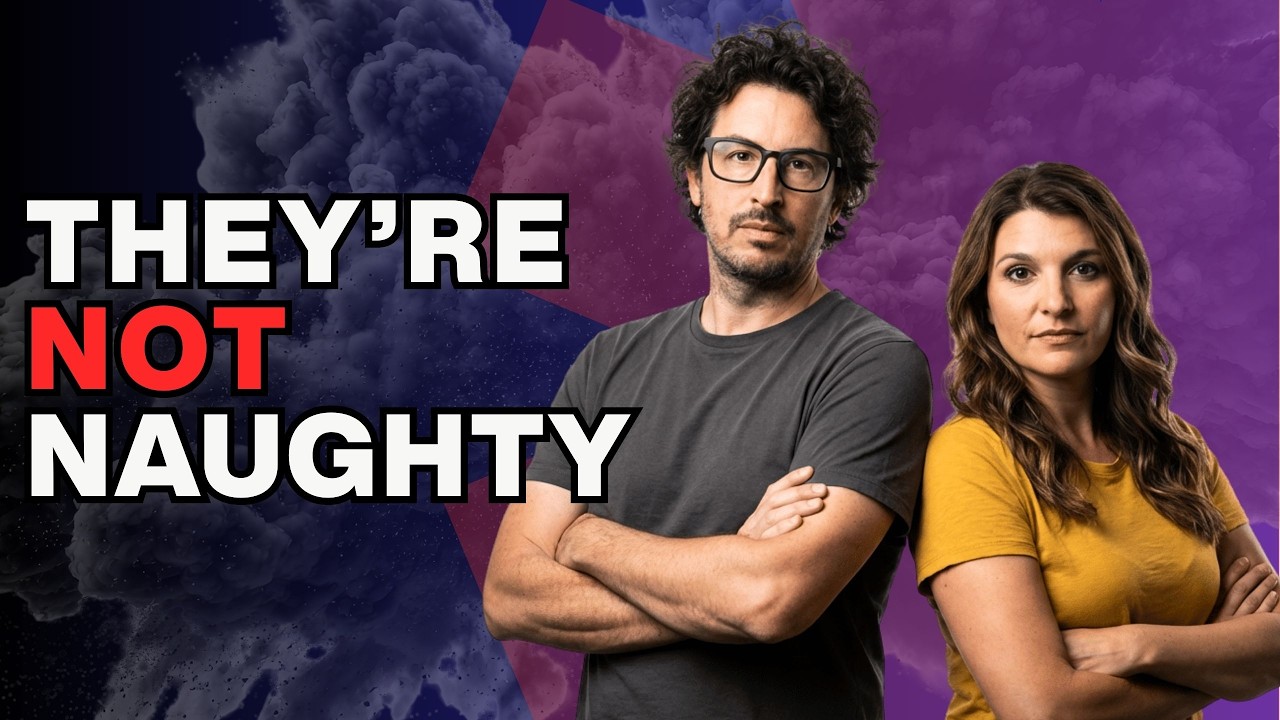
Every Behaviour Is Trying to Tell You Something
38 min
Go deeper
Watch the full conversation on YouTube
A note on accuracy:While every effort has been made to ensure the information in this post is accurate at the time of writing, facts, policies and research can change. We're human, and sometimes we get things wrong. If you spot something that needs updating, we'd genuinely love to hear from you.

Dave Harrison
ESW · Neurodiversity Advocate · Podcast Host
Dave has spent 15+ years working in Australian classrooms as an Education Support Worker, with a background that also spans film school and film projects. He's the founder of THRVHUB, host of the Different Is Normal podcast and a passionate advocate for neurodivergent kids and the families who love them.
More about DaveComments
Sign in with GitHub to leave a comment. All comments are moderated through GitHub Discussions: respectful and on-topic only.