There's a version of masking that nobody in the classroom catches, because it looks like the ideal student. Sitting still. Looking at the front. Not making a sound. And the teacher sees that and thinks: great, she's got it today. She's focused. She's engaged.
She's not. She's spending every available unit of energy trying to look like she is.
Masking is the process of suppressing who you are to fit the expectations of a space. For neurodivergent people, especially those who are late diagnosed, or undiagnosed, or in environments that don't accommodate difference, it can become automatic. So automatic you forget you're doing it. But the nervous system doesn't forget.
There are different kinds of energy that masking drains. There's cognitive energy: the constant self-monitoring. Am I sitting correctly? Is my face doing the right thing? Am I talking too much or not enough? Am I making enough eye contact? Too much? That's a running commentary in the background of every conversation and every lesson, and it leaves very little room for anything else.
There's emotional energy: suppressing natural responses. Not stimming when you need to. Not saying the thing you want to say. Pretending something doesn't bother you. Laughing at the joke you didn't find funny because everyone else is laughing. All of that is expenditure without any return.
“You can't build a real relationship while you're simultaneously performing for the audience. And you can't find out what you love while you're using all your resources just to appear okay.”
Follow on Instagram
And there's social energy: performing neurotypicality in real time. Monitoring your tone, mirroring the person across from you, reading micro-signals in faces and voices and body language and deciding what they mean and how to respond, while also participating in the conversation. That's an extraordinary amount of parallel processing.
When our son was at school, he wouldn't eat his lunch. For years I couldn't understand it. He loved his lunch. We'd packed exactly what he wanted. And he'd come home with most of it untouched. What I finally understood, and what Emily pointed out in a way that stopped me cold, is that when you're masking, you don't have the energy for eating either. That energy is already fully allocated.
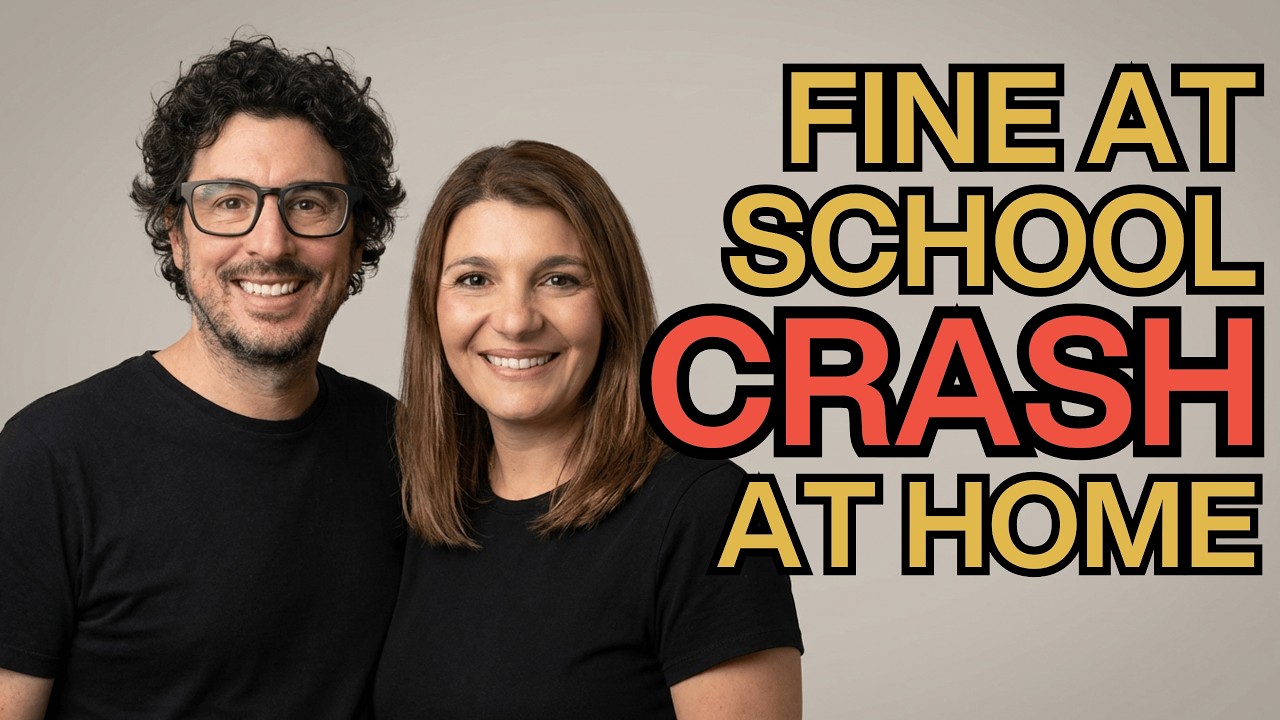
The crash comes when they walk through the front door. Which is why the child the school sees and the child you see at home can feel like entirely different people. The school sees someone managing. You see someone who managed until they didn't have to anymore.
The real cost of masking is what it displaces. It displaces learning. It displaces joy. It displaces creativity and friendship and the ability to connect with other people in any meaningful way. You can't build a real relationship while you're simultaneously performing for the audience. You can't find out what you love while you're using all your resources just to appear okay.
And then there's the opposite: what it looks like when the mask comes off. I watched our son discover a new type of music recently. His therapy assistant was playing it and he just lost himself in it. There was no self-monitoring, no audience, no performance. Just this completely uninhibited response to something that moved him. It was one of the most beautiful things I've ever seen.
Key takeaways
- Masking often looks like compliance, but it's not the same thing
- Cognitive, emotional and social energy are all depleted by masking
- Signs of masking drain include not eating, after-school crashes, and withdrawal
- Creating safe spaces where masking isn't required is one of the most important things you can do
I don't want him to mask. I want him to find more and more places where he doesn't have to.
Episode 6 · Watch the conversation
The Hidden Cost of Keeping It Together All Day
1h 23min
Go deeper
Watch the full conversation on YouTube
A note on accuracy:While every effort has been made to ensure the information in this post is accurate at the time of writing, facts, policies and research can change. We're human, and sometimes we get things wrong. If you spot something that needs updating, we'd genuinely love to hear from you.

Dave Harrison
ESW · Neurodiversity Advocate · Podcast Host
Dave has spent 15+ years working in Australian classrooms as an Education Support Worker, with a background that also spans film school and film projects. He's the founder of THRVHUB, host of the Different Is Normal podcast and a passionate advocate for neurodivergent kids and the families who love them.
More about DaveComments
Sign in with GitHub to leave a comment. All comments are moderated through GitHub Discussions: respectful and on-topic only.