My brother was diagnosed with ADD in the very early nineties. This was a time when the diagnosis was still relatively new, not well understood, and heavily stigmatised. When my mother was told her son had ADD, the paediatrician said something to her that has stayed with me my whole life: 'It doesn't matter what the experts say. You're his mother. What you're experiencing holds more weight than any clinical assessment.'
My brother had a lot to navigate. As a toddler, he suffered severe burns and spent a long time in hospital recovering. He had significant hearing difficulties, almost profoundly deaf in one ear. Recurrent ear infections, surgeries, years of speech and occupational therapy. He was behind, visibly, in ways that meant the family energy went where the family energy needed to go.
I was five years older. I was, by any external measure, coping. Bright kid. Social. Tenacious. I got good grades, particularly in the early years. I made friends. I knew how to read a room and perform what was expected. At school, I was one of the kids who managed.
What I couldn't see then, and what makes complete sense now, is that managing and thriving are not the same thing. Managing is exhausting. Managing is a full-time job. And it's invisible, because the output looks fine and no one thinks to ask what it cost.
High school is where things got harder. The academic demands increased. The social demands increased. The scaffolding that had helped me through primary school fell away, because the assumption was that by now I could handle it independently. And outwardly, I still mostly could. But it was getting more difficult, and I didn't have language for why.
“Managing and thriving are not the same thing. Managing is exhausting. Managing is a full-time job. And it's invisible, because the output looks fine, and no one thinks to ask what it cost.”
Follow on Instagram
By the time I finished school, I didn't know what I wanted to do. I enrolled in a university degree, disability studies, fittingly, but couldn't make it work. The structure, the three-hour commute, the expectation of independence without any of the supports that had been quietly there before. I made it a few months before I walked into my mother's bedroom late at night and told her I thought I needed to leave.
She said: is that all? She'd thought it was going to be something far worse. And then: if you're not happy, just do it. Which was the most generous thing anyone could have said to me.
I went to work instead. I started in a call centre and spent fifteen years moving through a payroll and HR company. And I loved it, not for the payroll, but for the people. Managing teams, supporting people, building a community within a company. Looking back, the thread was there the entire time. Every role I've held that stuck has been one where the work was about people.
When I became a parent, everything changed. Not in a dramatic moment, in the slow, chemical, undeniable way that parenthood rewires you. Watching my daughter navigate a world that didn't quite fit, advocating for her, eventually receiving her diagnosis, then my own, built a picture I couldn't have seen from any other vantage point.
I received my own diagnosis as an adult, after my daughter's and before my son's. And the feeling I remember most clearly isn't relief, though there was relief. It was grief. Grief for the years I'd spent thinking there was something fundamentally wrong with me, when there wasn't. There was just a mismatch between how my brain worked and what the world assumed about how brains work.
Key takeaways
- Late diagnosis in women is common, the 'bright kid who copes' profile often goes unseen
- Sibling dynamics can leave other children's needs underserved without anyone noticing
- Adult diagnosis brings grief alongside relief, grief for the years spent without understanding
- A name for your experience isn't a label. It's language, and language changes everything
That mismatch has a name now. And having a name for it changes how you explain it to yourself, to your children, and to anyone who asks.
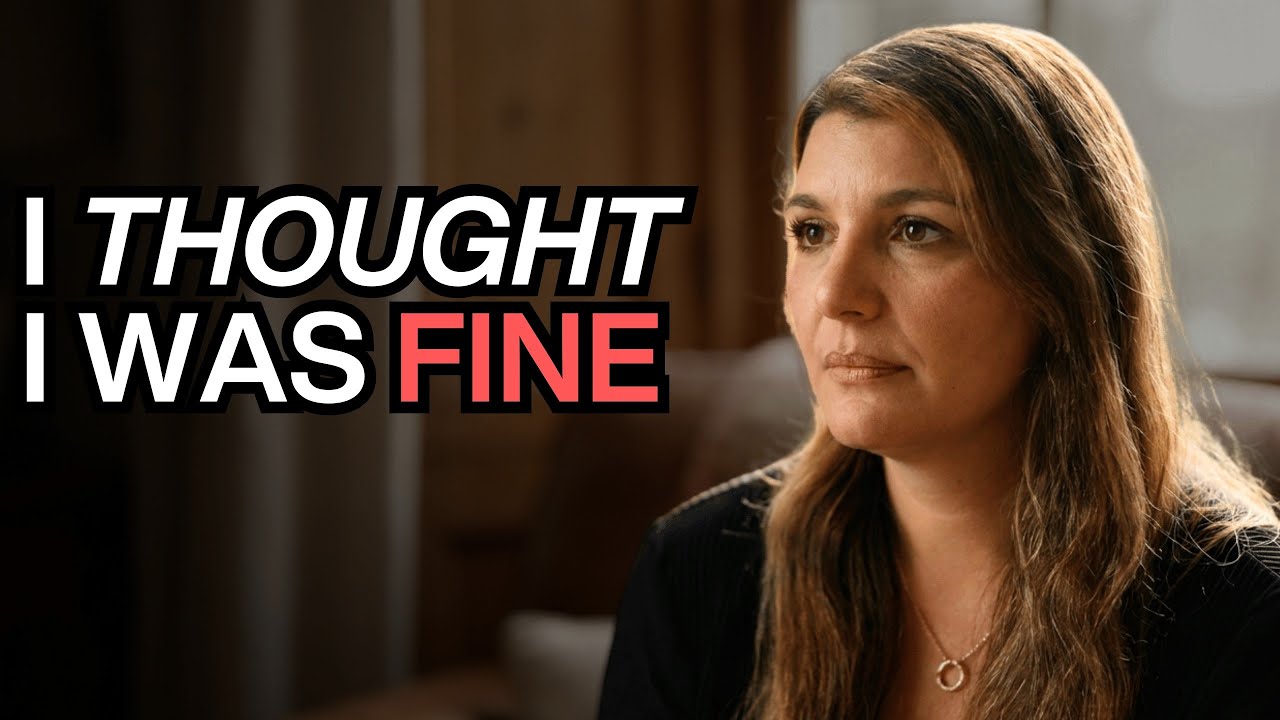
Episode 12 · Watch the conversation
Growing Up Without a Name for It
22 min
Go deeper
Watch the full conversation on YouTube
A note on accuracy:While every effort has been made to ensure the information in this post is accurate at the time of writing, facts, policies and research can change. We're human, and sometimes we get things wrong. If you spot something that needs updating, we'd genuinely love to hear from you.

Dave Harrison
ESW · Neurodiversity Advocate · Podcast Host
Dave has spent 15+ years working in Australian classrooms as an Education Support Worker, with a background that also spans film school and film projects. He's the founder of THRVHUB, host of the Different Is Normal podcast and a passionate advocate for neurodivergent kids and the families who love them.
More about DaveComments
Sign in with GitHub to leave a comment. All comments are moderated through GitHub Discussions: respectful and on-topic only.