When I was eight and a half months pregnant, my wife and I went away for the weekend.
That sentence needs context. We had our first child on the way. We went with good friends to a place a couple of hours from Melbourne. My friend and I went for an early morning bike ride. I hit something on the road and came off my bike. I don't remember anything that happened next. I'm told I stood up, said a few words, and then lost consciousness. My friend was medically trained. He took my phone out of my back pocket and called emergency services.
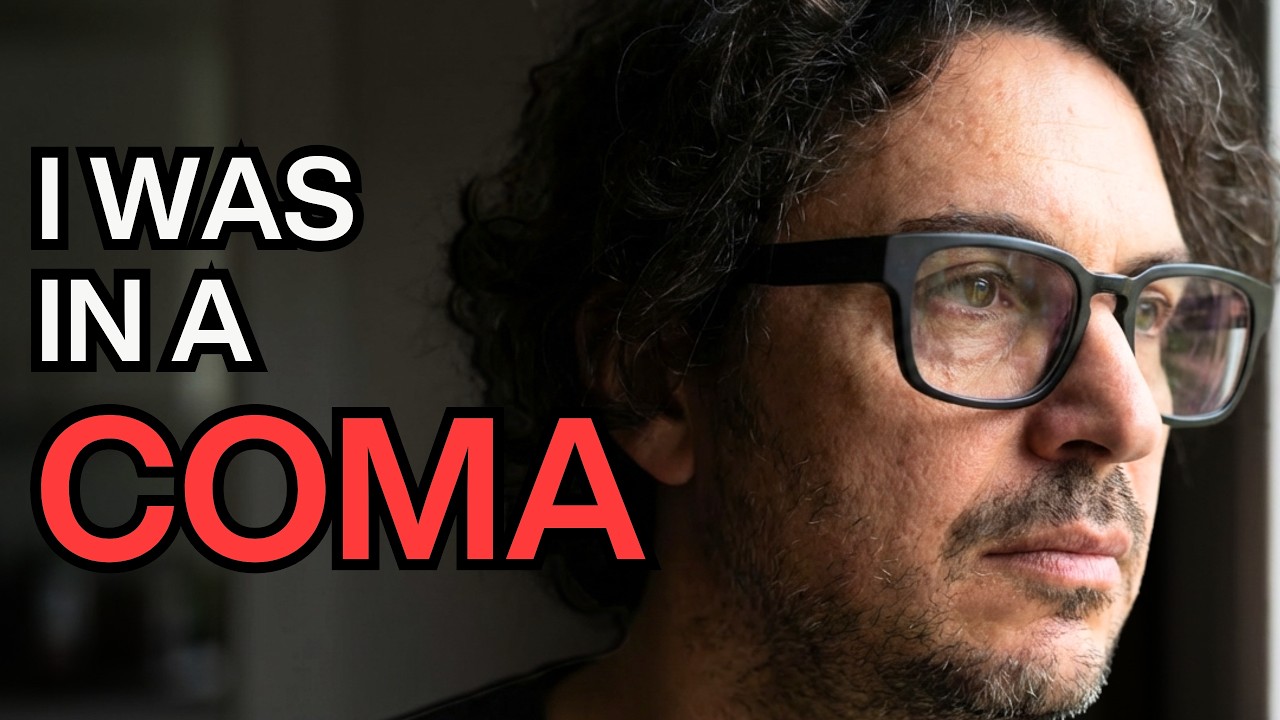
I was airlifted to the Royal Melbourne Hospital. I was in a coma for weeks. My wife gave birth to our son while I was in hospital. An ambulance took me to see him for an hour on the day he was born, and then I went back.
The first clear memory I have from that time is waking up in a room I didn't recognise, not knowing where I was or what had happened. And the only thought I had was: I'm tired. I'm going to sleep. That's all I had to give. My brain was doing what it could with what it had, which at that point wasn't much.
Recovery meant learning things again. Walking. Talking. Seeing clearly, everything was too much, like being inside a balloon, the world blurry and overwhelming and too loud. I had an acquired brain injury. I didn't know then that this was a form of neurodiversity. I didn't know until very recently, when something we said in a recording session made me look it up.
“The accident hadn't made me more creative or ambitious. But without it, I would have stayed in the life that was already built and not looked too hard at whether it was the right one.”
Follow on Instagram
I went back to work eventually, slowly. Two hours a week at first. And I looked at my job, the office, the routine, the daily commute, and I realised I hated it. Not the people. Not the salary. But what the work actually was. The accident had taken a lot from me, but it had given me this: clarity about what I didn't want to spend my time doing.
So I started doing what I'd always loved and never taken seriously enough. I had a camera. My dad always had a camera. At university, my wife and I had made little videos together. I found connections that led to filming a music festival in Adelaide. That led to other work, ads, television, more events. Then Emily and I opened a fruit and vegetable shop in our local area. Then a café with our own roastery. Then we sold everything and spent eight months travelling around the world.
None of that would have happened if I hadn't come off the bike. Not because I needed the accident to be creative or ambitious, but because without it, I would have stayed in the life that was already built and not looked too hard at whether it was the right one.
When we came back from our trip, I wanted to give something back. The education support workers who had made a difference in our son's life, the good ones, the ones he came home talking about, had changed things for him. I wanted to be that for someone. So I did the training, which is how I met Emily, and here we are.
Key takeaways
- An acquired brain injury is a form of neurodiversity, one that builds real empathy
- Life-changing events can fundamentally reorganise your priorities in unexpected ways
- Following what you actually love, rather than what's expected, is rarely a mistake
- You can reach a point where you want to give back the thing that was given to you
I still have scars. The brain injury is part of how I see things now. It's in the way I look at everything. Including my son. Including neurodiversity. Including the students I sit with in classrooms and the conversations Emily and I have in this podcast. The accident didn't make me a better person, I'd rather not have had it. But the version of me that exists now, with everything that changed, wouldn't trade what came after for anything.
Episode 11 · Watch the conversation
The Accident That Changed the Way I See Everything
22 min
Go deeper
Watch the full conversation on YouTube
A note on accuracy:While every effort has been made to ensure the information in this post is accurate at the time of writing, facts, policies and research can change. We're human, and sometimes we get things wrong. If you spot something that needs updating, we'd genuinely love to hear from you.

Dave Harrison
ESW · Neurodiversity Advocate · Podcast Host
Dave has spent 15+ years working in Australian classrooms as an Education Support Worker, with a background that also spans film school and film projects. He's the founder of THRVHUB, host of the Different Is Normal podcast and a passionate advocate for neurodivergent kids and the families who love them.
More about DaveComments
Sign in with GitHub to leave a comment. All comments are moderated through GitHub Discussions: respectful and on-topic only.