There's a school in my area that by most measures looks like the best option. Great reputation. Long waiting list. Excellent results. We visited it when our son was ready for high school. We went twice, asked our questions, got good answers.
We didn't choose it.
When you have a neurodivergent child, the question isn't 'is this a good school?' Almost every school is good at something. The question is 'is this the right environment for my specific child to participate, regulate, learn and feel safe?' Those are different questions, and the answers are rarely the same.
The moment that made our primary school decision for us was meeting the two principals. The first one walked into the room, shook our hands, and spoke to my wife and me about our son as if he wasn't there. Everything directed at us. Very polished, very thorough.
The second one walked in, crouched down, and spoke directly to our son. Asked him questions. Made him part of the conversation. Checked in with us, yes, but the child was the point of the room. And that was it. That was the school.
“The question isn't 'is this a good school?' The question is 'is this the right environment for my specific child to participate, regulate, learn, and feel safe?' Those are different questions.”
Follow on Instagram
When it came to high school, my wife and I visited around twenty schools. Some we visited multiple times, once with a staff member and once with a different staff member, asking the exact same questions each time and seeing whether the answers were consistent. Consistency matters. If the first person tells you one thing and the second tells you another, you're seeing what the school actually is versus what it projects.
There was one tour we walked out of. The school had no interest in students with additional needs. It was clear within ten minutes. That school is probably excellent for the students it's designed for. But our son was not those students, and no amount of its reputation was going to change that.
One of the most useful conversations I had was with a principal who told me: 'You're lucky, all the schools in this area are good. You won't pick a bad one. You'll just pick the right one or one that's not quite the right fit.' That sentence reframes the entire exercise. You're not trying to avoid a mistake. You're trying to find a match.
Some of the questions we asked: How is support determined, by diagnosis or by functional impact? What happens when my child can't be in the classroom? What does regulation look like here? Is the uniform flexible? What does the wellbeing space look like? What accommodations are in place, and how are they reviewed?
You're listening for more than the answers. You're listening for how quickly those answers come, whether they're rehearsed or genuine, whether the person in front of you seems curious about your child or inconvenienced by the question.
And here's what nobody tells you enough: you can change. If you choose a school and it turns out not to be the right fit, change. Principals change, policies change, teachers change, your child changes. We eventually pulled our son out of school entirely. Home-schooling turned out to be the right fit for where he is now. A few years ago, that would have felt unthinkable.
Key takeaways
- Visit the same school more than once and ask the same questions to different people
- Watch how the school responds to your child directly, not just to you
- Schools are legally required to make reasonable adjustments regardless of funding tier
- Choosing a school is not permanent, you can always change if the fit isn't right
Choose the place where your child can breathe. Everything else will follow from there.
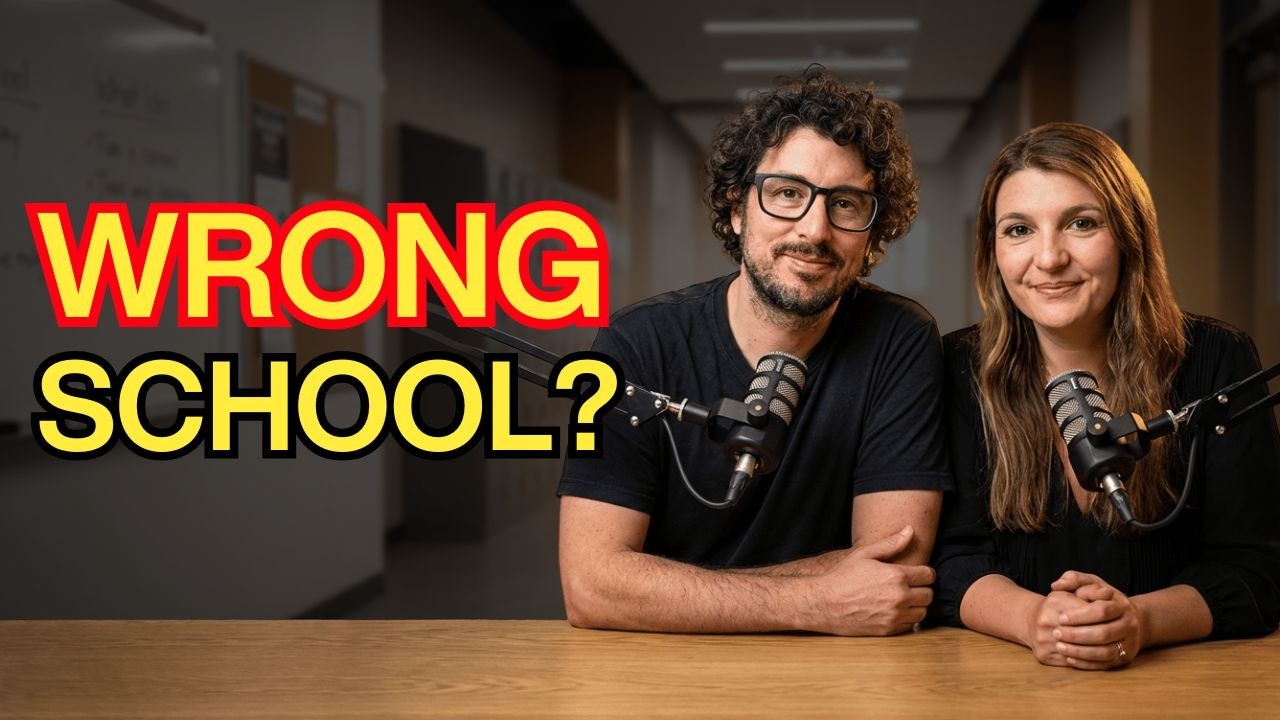
Episode 7 · Watch the conversation
How to Find the Right School (Not Just a Good One)
1h 10min
Go deeper
Watch the full conversation on YouTube
A note on accuracy:While every effort has been made to ensure the information in this post is accurate at the time of writing, facts, policies and research can change. We're human, and sometimes we get things wrong. If you spot something that needs updating, we'd genuinely love to hear from you.

Dave Harrison
ESW · Neurodiversity Advocate · Podcast Host
Dave has spent 15+ years working in Australian classrooms as an Education Support Worker, with a background that also spans film school and film projects. He's the founder of THRVHUB, host of the Different Is Normal podcast and a passionate advocate for neurodivergent kids and the families who love them.
More about DaveComments
Sign in with GitHub to leave a comment. All comments are moderated through GitHub Discussions: respectful and on-topic only.