There's a document that sits at the centre of your neurodivergent child's school experience, and most families never know it exists until they're already deep into the system. It's called an Individual Learning Plan, an ILP, or an IEP depending on your school, and it's the closest thing you'll get to a comprehensive map of what your child needs and how the school intends to provide it.
These documents are living things. They change. They should change. The goal that was everything in term one might be irrelevant by term three, and something entirely new might be the priority. When they're working, these plans are revised, reviewed, and genuinely informed by what's actually happening, not just what the school hopes is happening.
One of my daughter's goals last year had nothing to do with academics. The goal was simply for her to feel safe on campus. Not to attend every class. Not to complete every assignment. Just to be on the grounds and feel that being there was okay. That sounds modest if you haven't lived what precedes it. If you have, you know that achieving it was enormous.
The meeting where these plans are reviewed is called an SSG, a Student Support Group. Parents, teachers, sometimes leadership, sometimes specialists. Everyone who matters to your child's experience in the room at once. Bring your child, when they're ready. Their buy-in matters more than anyone else's. A goal they've agreed to, in their own voice, will travel further than any goal handed down to them.
I've sat in SSGs where my daughter said, very directly, 'I don't want to do that', and we changed the goal. Because the goal only matters if it's hers.
“The goal that sounds modest if you haven't lived what precedes it is enormous if you have. Getting to camp, feeling safe on the grounds, getting through the door, those things take everything.”
Follow on Instagram
Something that's been transformative for us is distinguishing between capability and capacity. My children are capable of many things. What we manage is what it costs them to do those things. When we reduce the cost, the capability shows up. That distinction, capability versus capacity, is worth bringing into every SSG conversation.
When my daughter went on her Outward Bound camp, an intensive multi-day expedition, the preparation started months before. We found previous camp photos online so she'd seen the location before we arrived. We got a sample schedule so we could identify the high-capacity moments and plan around them. She needed to know about the wetsuits for rafting before we got there, because wearing a wetsuit wasn't something her body could do without preparation. We went to Kathmandu and tried on every pair of hiking pants to find ones that met both the camp requirements and her sensory requirements.
She didn't take the bus with the other students. My husband drove her up the day before so that travel day could happen quietly, and she could begin the camp recovered. We packed her own food, her headphones, fidgets, and a small watercolour set because painting helps her regulate. We sent information to the camp staff about what masking looks like for her and what to watch for when she's approaching her limit.
She went to camp. She participated. She came home having done something she hadn't thought she could.
None of that happens without the questions. Questions like: what can we put in place before the funding arrives? What supports can we start now? Is there flexibility in how this activity works? What does the school need from us to make this possible? Not demanding. Not adversarial. Just: here is my child, here is what they need, and how do we build a path together?
Key takeaways
- ILPs and SSGs are living documents, push for regular reviews, not annual check-ins
- Include your child in goal-setting wherever possible; their buy-in is essential
- Preparation for big events (camps, transitions) often needs to start months ahead
- Distinguish between what your child is capable of and what it costs them to do it
The schools that answer those questions well are the schools worth staying at.
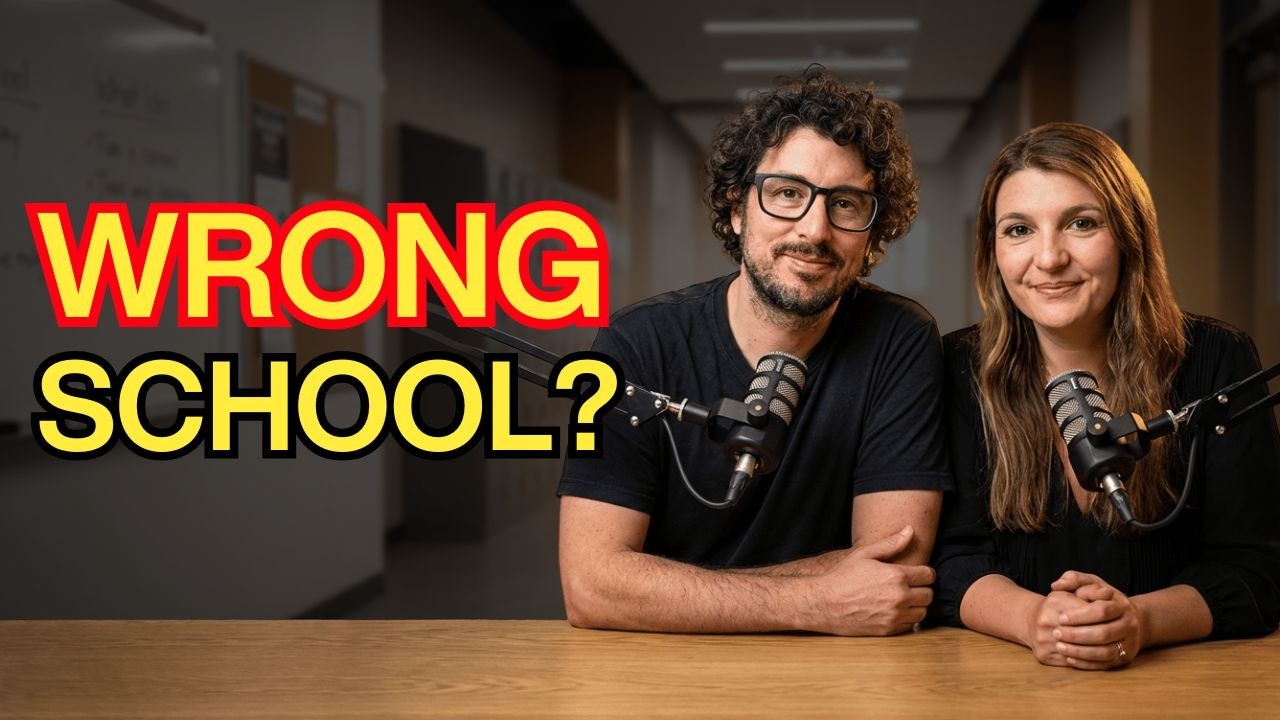
Episode 7 · Watch the conversation
The Questions Schools Won't Answer Until You Ask the Right Way
1h 10min
Go deeper
Watch the full conversation on YouTube
A note on accuracy:While every effort has been made to ensure the information in this post is accurate at the time of writing, facts, policies and research can change. We're human, and sometimes we get things wrong. If you spot something that needs updating, we'd genuinely love to hear from you.

Dave Harrison
ESW · Neurodiversity Advocate · Podcast Host
Dave has spent 15+ years working in Australian classrooms as an Education Support Worker, with a background that also spans film school and film projects. He's the founder of THRVHUB, host of the Different Is Normal podcast and a passionate advocate for neurodivergent kids and the families who love them.
More about DaveComments
Sign in with GitHub to leave a comment. All comments are moderated through GitHub Discussions: respectful and on-topic only.