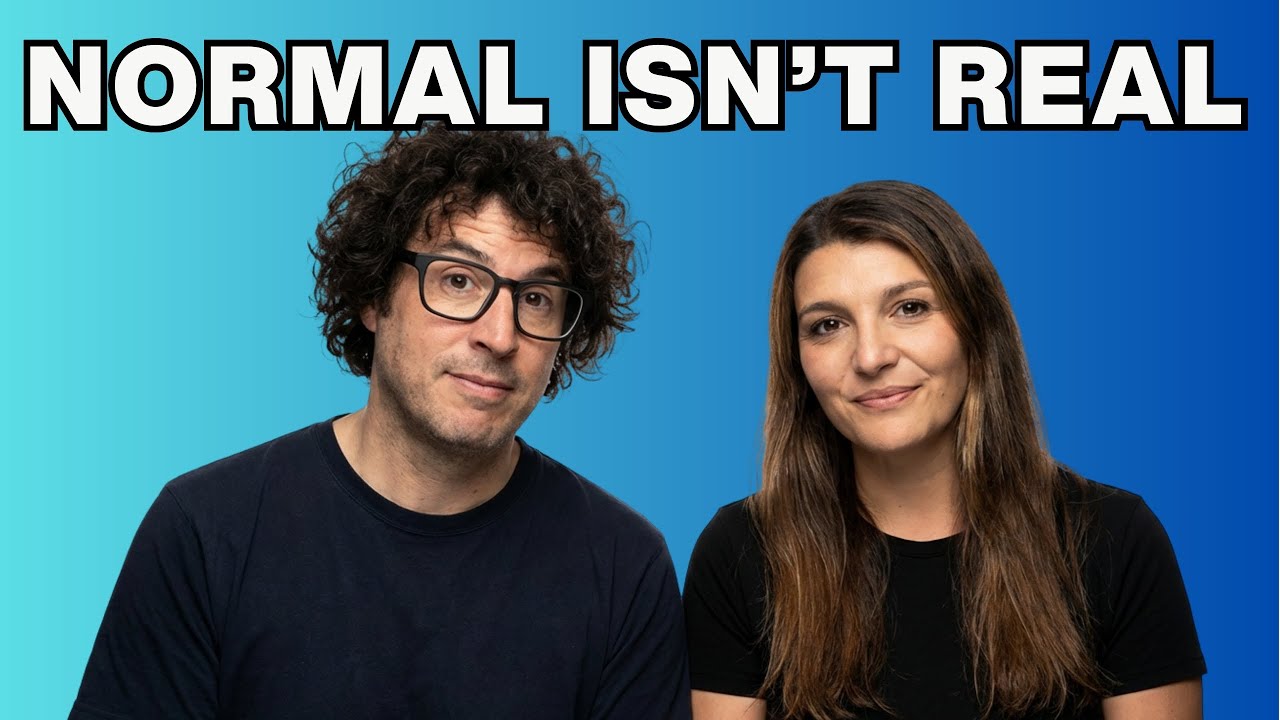
Normal is a word we use constantly, and I'd argue none of us could actually define it. If I asked someone in Sudan what a normal person looks like, and then asked someone in Sweden, I promise you they'd give me two completely different answers. So when did we decide that one version of normal was the template everyone should aim for?
We looked it up before one of our recording sessions, and it turns out normal started as a mathematical term, something to do with consistency and averages. Then somewhere along the way, it became a social contract. A set of rules that determines whether you belong. And when you're neurodivergent, that's a contract you're often handed without being able to read it, let alone sign it.
What gets rewarded is sameness. What gets punished is difference. We see it in classrooms, in workplaces, in the tiny moments nobody thinks to write down, the student of the week awards that go to the same kids, the school events structured around the children who can sit still and follow instructions, the unspoken message that's being sent every day: this is what good looks like.
I think about a student I work with now who comes to school for a few periods a day. Initially, he wouldn't sit inside the classroom. We'd position ourselves just outside the door, still connected to the lesson, still part of it. Slowly, over weeks, we moved inside. Now he's there. He's present. He's contributing, when the topic catches him, in ways that genuinely blow me away.
There's no award for that. There's no student of the week ribbon for 'showed up when showing up was almost impossible.' And that's where we're still missing something. Because for his parents, and for him, what he's achieved is enormous. Medal-worthy. The broader school system doesn't yet have a way to recognise it.
“What gets rewarded is sameness. What gets punished is difference. That message is sent every day in classrooms, and most people never notice it.”
Follow on Instagram
When our son was in primary school, he got through most of the year without a student of the week award. I wasn't upset that he wasn't being rewarded for things he wasn't doing. I was upset that nobody was recognising what he was doing. Getting dressed. Getting there. Getting through the noise of the corridor and sitting down. Those things cost him more than the kids getting those awards will ever know.
But here's the thing: normal is also changing, and faster than I expected. During COVID, everything we thought we knew about social connection was reorganised. For our son, it was the best thing that ever happened. He could control his communication. He could choose when to engage, on his terms, through a screen, with people from all over the world.
Now he's sixteen and he has friends, real ones, across multiple countries. They talk anime, make characters together, build worlds together. A few years ago, I would have described normal friendships as going to the park, kicking a football, being physically present. What I know now is that wasn't normal, it was my normal. His version is just as real, just as meaningful, and in some ways more expansive than anything I had at his age.
The version of normal most of us grew up with was built around what was easiest to manage at scale. Classrooms with one teacher and thirty kids needed rules that worked for the majority. But the more we look at it, the more we realise that what we called 'the majority' was never as large as we assumed. We just didn't have the language to see the edges.
We do now. And that means we have a choice. We can keep measuring everyone against the same impossible average. Or we can start asking a different question: what does success look like for this particular person, in this particular context, right now?
Key takeaways
- Normal is a social construct built on averages, not a destination
- Schools still largely recognise and reward neurotypical behaviour
- Online and non-traditional friendships are as real and valuable as any other
- Redefining success at the individual level is where genuine inclusion starts
That question is where things change. That's where different stops being a deficit and starts being a description.
Episode 2 · Watch the conversation
Normal Was Never Real
52 min
Go deeper
Watch the full conversation on YouTube
A note on accuracy:While every effort has been made to ensure the information in this post is accurate at the time of writing, facts, policies and research can change. We're human, and sometimes we get things wrong. If you spot something that needs updating, we'd genuinely love to hear from you.

Dave Harrison
ESW · Neurodiversity Advocate · Podcast Host
Dave has spent 15+ years working in Australian classrooms as an Education Support Worker, with a background that also spans film school and film projects. He's the founder of THRVHUB, host of the Different Is Normal podcast and a passionate advocate for neurodivergent kids and the families who love them.
More about DaveComments
Sign in with GitHub to leave a comment. All comments are moderated through GitHub Discussions: respectful and on-topic only.