My daughter was eleven, nearly twelve, when the path towards her diagnosis really started. But it didn't start with a doctor's referral. It started with her.
She came to me and said she wanted to know more. She didn't know what that meant, or what it involved. She just knew she felt different and didn't know why. That was the beginning. The fact that she was the one who asked is something I think about often.
We were living in the United States at the time, navigating a different medical system. After a very long neurological assessment process, we got confirmation: ADHD with combined presentation, both inattention and hyperactivity, a general anxiety disorder, and dyscalculia. With a note that there may also be autism. The advice was: let's address the ADHD first, put some supports in place, and then review.
The autism diagnosis didn't come for almost two years. We were back in Australia by then. And when it came, I felt something I hadn't fully expected: relief. Pure, clean relief. I had known something for so long. I couldn't have named it, but I'd felt it. And the diagnosis validated that. My instincts as her mother had been right.
As a parent, you question yourself constantly. You're judged, whether that's real or perceived. And hearing someone say, yes, you were right, there was something, and here's what it is, matters more than you can describe. Not because you need to be right. But because the uncertainty is exhausting.
“She came to me and said she wanted to know more. She didn't know what it involved. She just knew she felt different and didn't know why. That was the beginning, and the fact that she was the one who asked is something I think about often.”
Follow on Instagram
Not long after my daughter's diagnosis, I went through my own assessment. What I felt then was more complicated. There was still relief, that validation. But layered underneath it was grief. Because I'm not a child. I've spent years, more than I'd like to admit, in a world that wasn't built for me, and not knowing why. All those moments I'd written off as personal failures. All those times I pushed through things I didn't have the words for. Looking back with the knowledge of my diagnosis, I could see what had actually been happening. And while that understanding was a gift, it also came with a sadness for how long I'd had to go without it.
My son's diagnosis was different. By then, we had language. We had understanding. Our whole family had lived in neurodiversity for years. So on the drive to his appointment, I asked him how he felt about it. He gave me the most very typical response: 'I don't really know.' Same kid who can't answer 'what do you want for breakfast' at full speed.
I pushed a little. If they say yes, autism, ADHD, how do you feel about that? He went quiet for a second. Then: 'I kind of hope they do. Because it will be an answer. Things will make more sense. And I know you can help me.'
So we made a deal. If they gave a diagnosis, we'd get a rainbow ice cream cake. If they didn't, vanilla. Just a cake, either way, because whatever the outcome, nothing was changing who he was.
We came home with the rainbow ice cream cake. His sister and I welcomed him into the neurodivergent family club. His father, who may or may not be neurotypical, got a small slice. You need a bit of vanilla sometimes.
Key takeaways
- Some diagnoses take years, trust your instincts even while you're waiting
- An adult diagnosis brings grief alongside relief, both are real and valid
- Involving your child in their own diagnosis process builds autonomy and trust
- Celebration reframes the diagnosis: not something to fear, but something to understand
What I've learned across three diagnoses, my daughter's, my own, and my son's, is that they're all different. The emotions are different. The readiness is different. The knowledge you walk in with changes everything. But the thing that stays constant is this: a diagnosis doesn't change who your child is. It just changes how clearly you can see them.
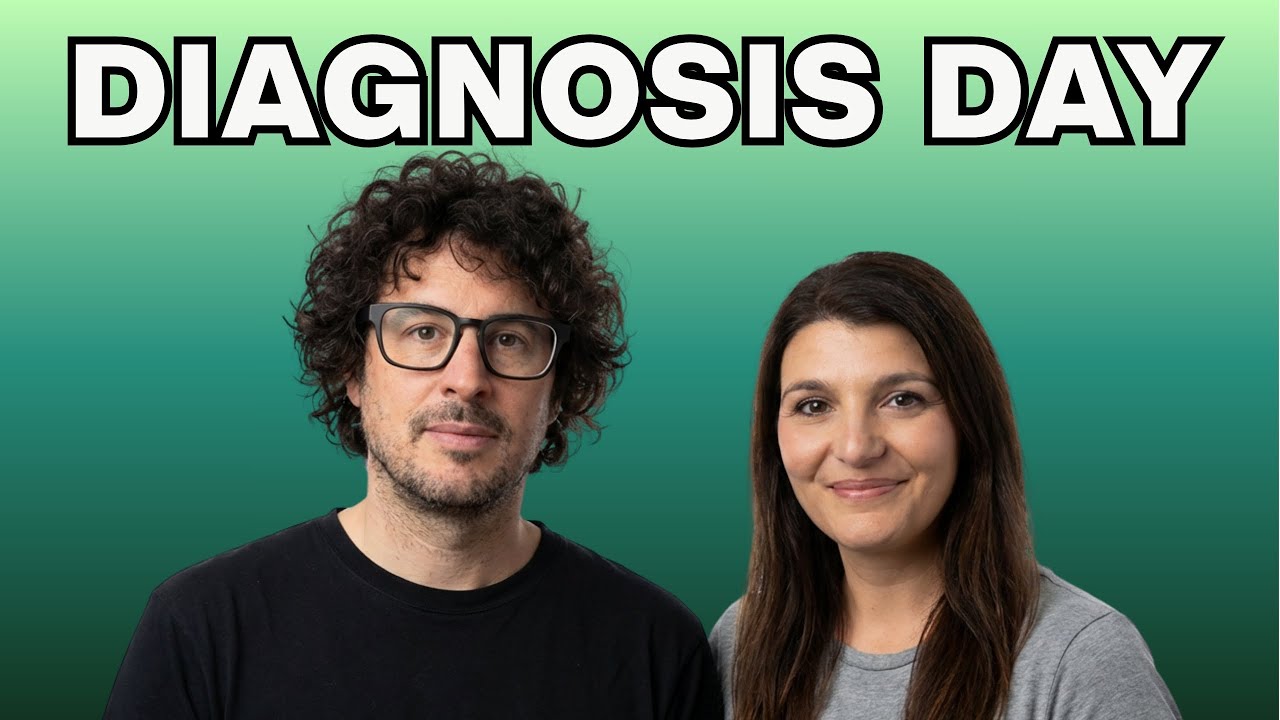
Episode 1 · Watch the conversation
Relief, Grief, and Rainbow Ice Cream Cake
37 min
Go deeper
Watch the full conversation on YouTube
A note on accuracy:While every effort has been made to ensure the information in this post is accurate at the time of writing, facts, policies and research can change. We're human, and sometimes we get things wrong. If you spot something that needs updating, we'd genuinely love to hear from you.

Dave Harrison
ESW · Neurodiversity Advocate · Podcast Host
Dave has spent 15+ years working in Australian classrooms as an Education Support Worker, with a background that also spans film school and film projects. He's the founder of THRVHUB, host of the Different Is Normal podcast and a passionate advocate for neurodivergent kids and the families who love them.
More about DaveComments
Sign in with GitHub to leave a comment. All comments are moderated through GitHub Discussions: respectful and on-topic only.