The social rules we all live by have never been written down anywhere. There's no document, no syllabus, no year-by-year curriculum in which someone explains: this is how you read a face, this is what it means when someone's tone drops slightly, this is the difference between a 'how are you' that actually wants an answer and one that's just a greeting.
Most people pick these rules up without realising they're learning anything. They just absorb it. Over years and interactions, the patterns form. And then one day, if those rules are missed or misread, everyone notices, except the person who missed them.
For many neurodivergent people, particularly those with autism, none of this is automatic. The patterns have to be deliberately learned. Rule by rule, context by context. And because the rules are context-specific, what's funny at home isn't funny at school, what's acceptable in year three isn't acceptable in year nine, the catalogue is enormous and never quite complete.
Our son learned this the hard way in primary school. There was a group of kids playing and he wanted in. He watched what they were doing, read the room as best he could, and drew a conclusion: that kid pushed that kid, and everyone laughed. He catalogued that under F for funny. And the next time he wanted to get someone's attention, he did the same thing. It didn't go the same way.
The problem wasn't that he hadn't paid attention. The problem is that the rule he'd learned was context-specific to a degree he couldn't have known. Who was involved, what came before it, how they all knew each other, the timing, all of that was part of what made it funny in the moment he observed. Change any one of those variables and the rule no longer applies.
“The rule he learned was: push someone, get laughs. What he didn't know is that the rule was context-specific in ways he couldn't have seen. Change any variable and the rule no longer applies.”
Follow on Instagram
Emily and I play a card game at home sometimes, Cards Against Humanity in a kids version. I know exactly which card is going to make my daughter laugh because we share a sense of humour. But with our son, I genuinely don't always know. When he puts down a card he thinks is hilarious, and no one reacts the way he expected, the look on his face in that moment is something I never want to cause.
We've learned to use those moments to teach. Not in a lesson, not formally, but gently, afterwards, when things are calm. What do you think they were thinking when you said that? What do you think I was feeling? We try to give him a wider map, more angles around each social situation.
Some things you simply can't teach from rules. Sarcasm, for instance. The way 'yeah, it was great' can mean two completely opposite things depending on delivery. We practice it deliberately now, I'll say something sarcastic and watch to see if he catches it. Increasingly, he does. He'll say: 'you're being sarcastic, aren't you?' And we both smile, because it is actually funny when it lands.
One of the phrases we've taught him is: 'were you joking?' It sounds simple. It gives him permission to ask, without having to guess. And it's changed a lot of conversations that used to end in confusion.
Key takeaways
- Social rules are learned by observation that not all brains do naturally
- Neurodivergent people often build exact, literal catalogues of social situations
- Teaching phrases like 'were you joking?' gives a tool without requiring the intuition
- The goal is making invisible rules more visible, not shaming those who miss them
The hidden list of social rules isn't a character test that some people pass and others fail. It's an invisible infrastructure that some people navigate intuitively and others have to learn explicitly. The answer isn't shame. The answer is making the invisible a little more visible.
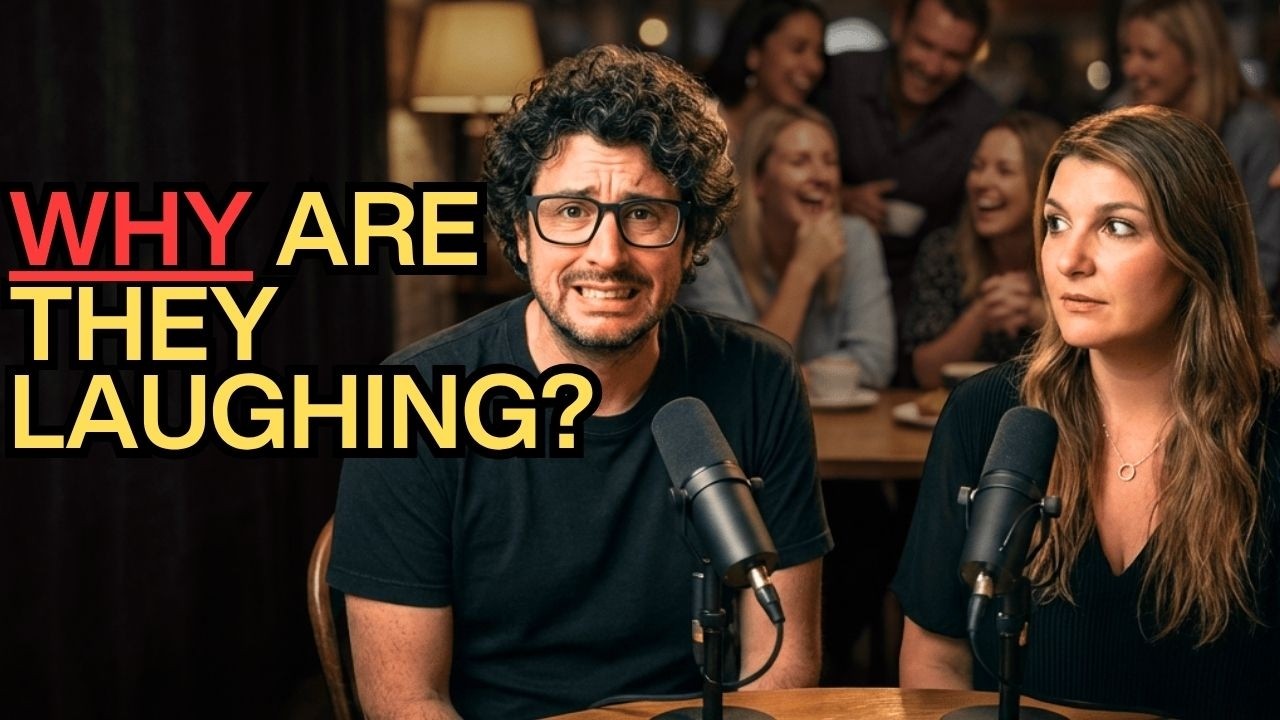
Episode 9 · Watch the conversation
Reading the Room When the Rules Are Invisible
54 min
Go deeper
Watch the full conversation on YouTube
A note on accuracy:While every effort has been made to ensure the information in this post is accurate at the time of writing, facts, policies and research can change. We're human, and sometimes we get things wrong. If you spot something that needs updating, we'd genuinely love to hear from you.

Dave Harrison
ESW · Neurodiversity Advocate · Podcast Host
Dave has spent 15+ years working in Australian classrooms as an Education Support Worker, with a background that also spans film school and film projects. He's the founder of THRVHUB, host of the Different Is Normal podcast and a passionate advocate for neurodivergent kids and the families who love them.
More about DaveComments
Sign in with GitHub to leave a comment. All comments are moderated through GitHub Discussions: respectful and on-topic only.