My daughter received an invitation to a friend's birthday recently. It had some flexibility built in, the friend had written that she understood if my daughter couldn't come for the sleepover, but she'd love to see her for roller skating and dinner. That one small act of accommodation, acknowledging what her friend could and couldn't do and leaving space for both, lifted something off my shoulders I didn't realise I was carrying.
Language matters enormously when you're neurodivergent. Not just the big conversations, but the everyday ones. The idioms we use without thinking. The social pleasantries that aren't honest. The gap between what words literally say and what they're actually supposed to mean.
A friend once told me a story about a family member moving into aged care. Relatives were coming to collect whatever they wanted from the house, and their neurodivergent son said he wanted Grandma's pots. Sure, they said. Come and get them. When they arrived, they found all the plants sitting on the ground, dug out and abandoned. He'd taken the pots. He didn't want the plants. He'd taken exactly what he'd asked for, and nothing else.
From a literal mind, that's not just logical, it's correct. He said what he meant, and he did exactly what was agreed. The confusion belongs to the people who assumed 'pot plants' meant the whole thing, and didn't say so.
“He said what he meant, and he did exactly what was agreed. The confusion belongs to the people who assumed 'pot plants' meant the whole thing, and didn't say so.”
Follow on Instagram
I navigate this daily. 'How are you?' is one of the most challenging greetings I encounter, particularly when I'm at low capacity. Because it's a question that sometimes means 'how are you?' and sometimes means 'hello.' And I genuinely cannot always tell which one it is. If I'm tired, or overwhelmed, or my ADHD has run its course for the day, I have to dig deep just to say 'I'm good, how are you?' without actually answering it honestly.
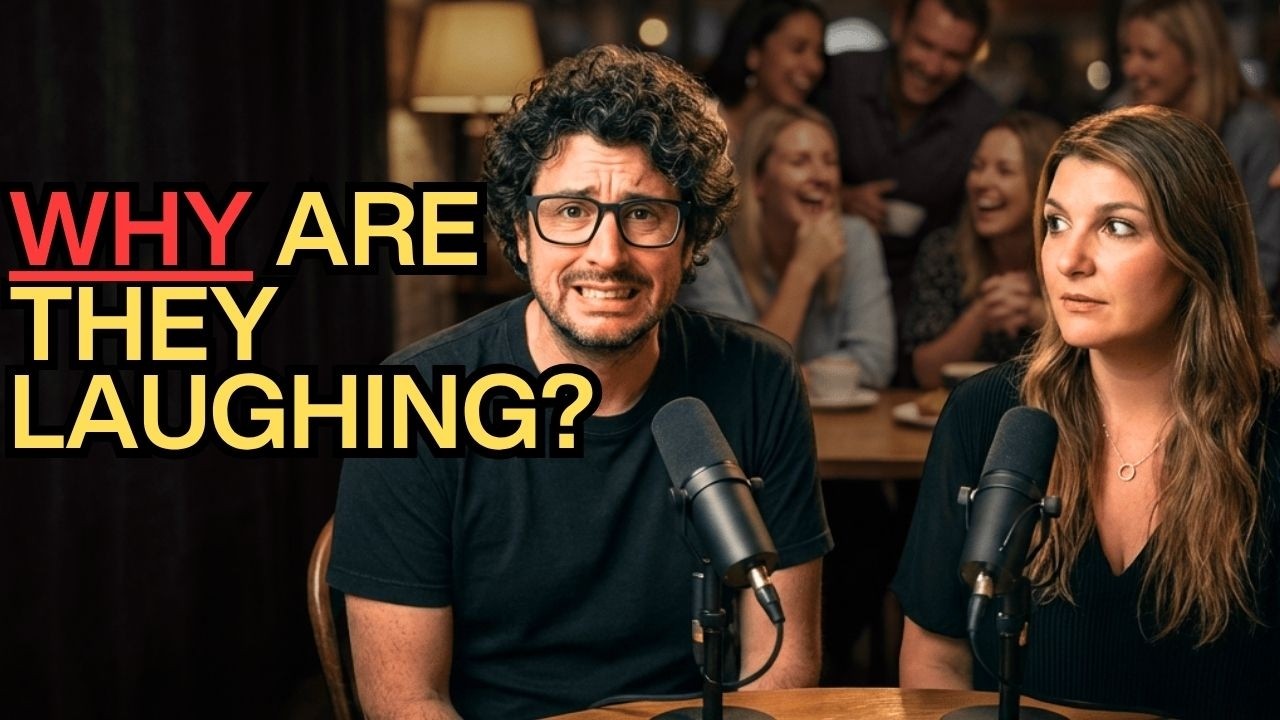
Once, in a class we were doing together, someone asked what everyone did for self-care. I came off mute and said 'therapy.' Immediately I knew it had landed wrong. Everyone else had said massages, or getting their nails done, or going for walks. The question was casual. I'd taken it at its word. I went red, even through the screen.
Dave pointed out that he has absolutely no memory of it. Which both helped and didn't help, because I'd replayed that moment many times by the time he said so. That's a particular dimension of how the neurodivergent mind can process social situations: the moment gets stored, recalled, re-examined. Was that right? Did that land? The answer is rarely available, so the question just keeps circling.
Our kids are literal in the most beautiful ways too. They find humour in exactly the things that are objectively funny, without the layer of social performance that decides what you're allowed to laugh at. When something genuinely amuses our children, the delight is completely unfiltered. There's no audience, no self-monitoring, no checking whether it's appropriate to laugh this hard. They just laugh.
Key takeaways
- Idioms and indirect language create real and genuine confusion for literal thinkers
- Social pleasantries like 'how are you' don't always mean what they literally say
- Neurodivergent people often replay social moments looking for confirmation they got it right
- Authenticity and literal expression, once understood, are some of the most beautiful things to witness
That authenticity, once you learn to see it, is extraordinary. Our job, as the people who love them, is to make sure they have enough spaces where it's safe to be that way.
Episode 9 · Watch the conversation
When Every Word Is Taken Exactly as Said
54 min
Go deeper
Watch the full conversation on YouTube
A note on accuracy:While every effort has been made to ensure the information in this post is accurate at the time of writing, facts, policies and research can change. We're human, and sometimes we get things wrong. If you spot something that needs updating, we'd genuinely love to hear from you.

Dave Harrison
ESW · Neurodiversity Advocate · Podcast Host
Dave has spent 15+ years working in Australian classrooms as an Education Support Worker, with a background that also spans film school and film projects. He's the founder of THRVHUB, host of the Different Is Normal podcast and a passionate advocate for neurodivergent kids and the families who love them.
More about DaveComments
Sign in with GitHub to leave a comment. All comments are moderated through GitHub Discussions: respectful and on-topic only.