The sunflower lanyard was one of the first things we found that changed how travel worked for our family. If you haven't come across it, it's a lanyard with a sunflower print that signals to airport and venue staff that the person wearing it has a hidden disability and may need extra care or time. No explanation required. No performance. Just the lanyard, and a system that knows what it means.
My wife and son both wear one. At Los Angeles airport, where the security screening is more thorough than most, we explained our situation, they saw the lanyard, and we were routed through without our son having to navigate the standard line. No one made a fuss. No one required us to justify ourselves. For a family that has spent years pre-explaining every situation in advance, that quiet competence from a stranger is almost moving.
We've been learning how to travel well for years. The preparation starts long before we leave: social stories, photos of where we're going, sample schedules, knowing where the toilets will be on road stops. The magic word in our household is 'might', not 'we will,' never 'we will,' always 'we might.' Because if you tell a person who processes language literally that something will happen, and then it doesn't, you've created a problem that takes the rest of the day to repair.
Our biggest trip was a long journey around the world, Japan, Europe, and beyond, when our son was fifteen. One of the first things we discovered in Japan was that the medication he takes for ADHD couldn't come with us. Japanese customs requires a permit for certain medications. We'd been through the process and were rejected, and we ran out of time to appeal. So we went without it.
“On a packed Tokyo train, my wife and I looked at each other over his head and both had to look away. Neither of us wanted him to see us getting emotional about a seat on a train.”
Follow on Instagram
He coped magnificently. Better than any of us expected. In Japan, without the school schedule, without the alarm and the uniform and the sensory demands of a building full of other people, his nervous system got a break it hadn't had in years. He was slower to wake up. He ate what he wanted, when he was ready. We visited things that interested him, at his pace, and skipped things that didn't.
On the trains in Osaka, the first few days, he wouldn't sit down unless the entire row was empty. If someone sat near him, he'd stand up. We didn't push it. We just kept taking the trains, every day. And slowly, over a week, something shifted. He'd sit with one person nearby. Then two. Then in a full carriage. One morning my wife and I looked at each other over his head on a packed Tokyo train and we both had to look away, because neither of us wanted him to see us getting emotional about a seat on a train.
The food expanded too. At home, his world is very particular. Specific brands, specific preparations, very little variation. In Japan, surrounded by things that had no equivalent at home, something about the novelty seemed to lower the threshold. Not completely, there were still plenty of noes. But there were more yeses than we'd seen in years.
Travel does that, when you let it go at the right pace. Not crammed with itinerary, not rushing to see the maximum number of things, but given enough space for each experience to land. We built in rest days. We had mornings with no plan. We chose 'we might' over 'we will.' And the version of our son who came home from that trip was different, not in who he was, but in the edges of what he knew about himself.
Key takeaways
- The sunflower lanyard is available from airports and many venues, it simplifies every travel interaction
- Use 'might' instead of 'will' in all travel descriptions, precision in language prevents meltdowns
- Early boarding, window seats, and electronics-only bags reduce unpredictable variables
- Travel can genuinely expand a child's world, but only when paced for their nervous system, not yours
The sunflower lanyard gets you into places more easily. But the thing that actually changes travel is time, preparation, and a willingness to let the destination arrive differently to how you pictured it.
Episode 10 · Watch the conversation
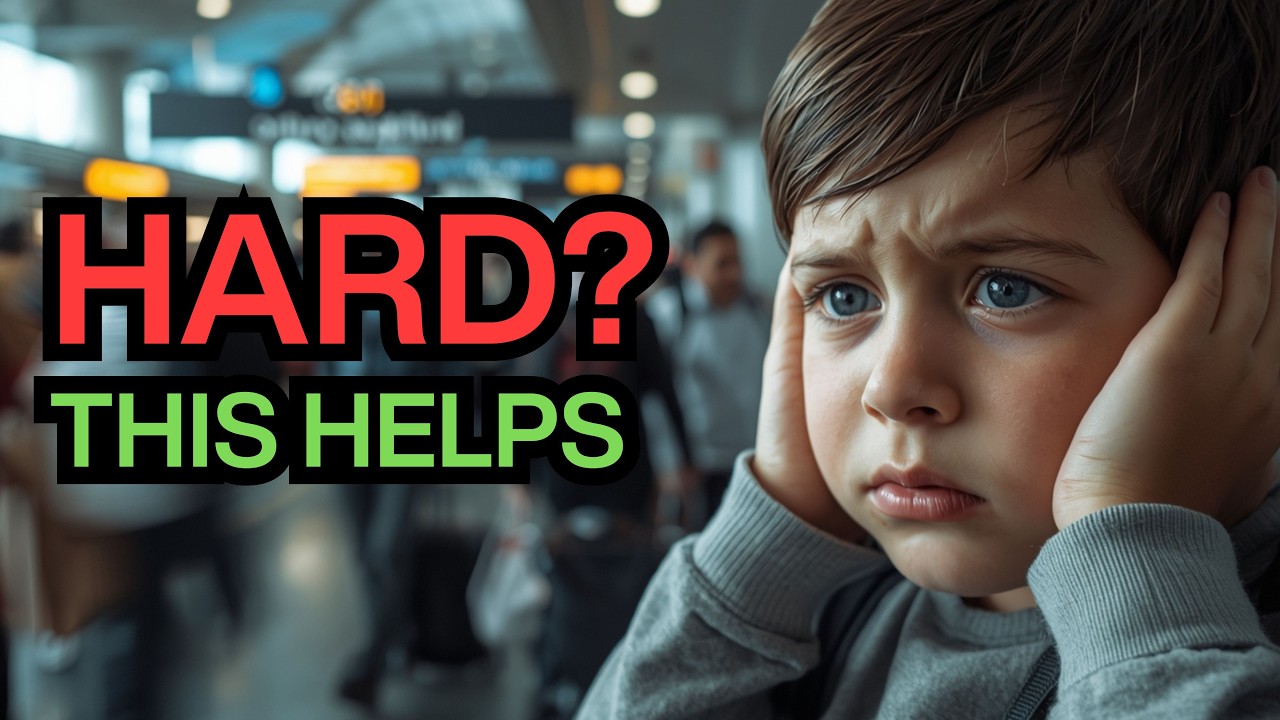
What We Learned Travelling the World with Our Son
30 min
Go deeper
Watch the full conversation on YouTube
A note on accuracy:While every effort has been made to ensure the information in this post is accurate at the time of writing, facts, policies and research can change. We're human, and sometimes we get things wrong. If you spot something that needs updating, we'd genuinely love to hear from you.

Dave Harrison
ESW · Neurodiversity Advocate · Podcast Host
Dave has spent 15+ years working in Australian classrooms as an Education Support Worker, with a background that also spans film school and film projects. He's the founder of THRVHUB, host of the Different Is Normal podcast and a passionate advocate for neurodivergent kids and the families who love them.
More about DaveComments
Sign in with GitHub to leave a comment. All comments are moderated through GitHub Discussions: respectful and on-topic only.